
In today’s digital-first world, social media marketing has become one of the most effective ways for businesses to connect with customers, build trust, and increase revenue. Whether you run a startup, a local business, or an established company, social media platforms provide countless opportunities to reach your audience where they spend most of their time. A well-planned strategy can transform casual followers into loyal customers while strengthening your brand identity.
Businesses that consistently invest in social media marketing enjoy higher visibility, stronger customer relationships, and improved conversion rates. Instead of relying only on traditional advertising, brands can interact directly with their audience, receive instant feedback, and create meaningful conversations. This guide explains everything you need to know, from understanding the basics to implementing a successful strategy that drives measurable business growth.
1. What Is Social Media Marketing?
Definition and How It Works
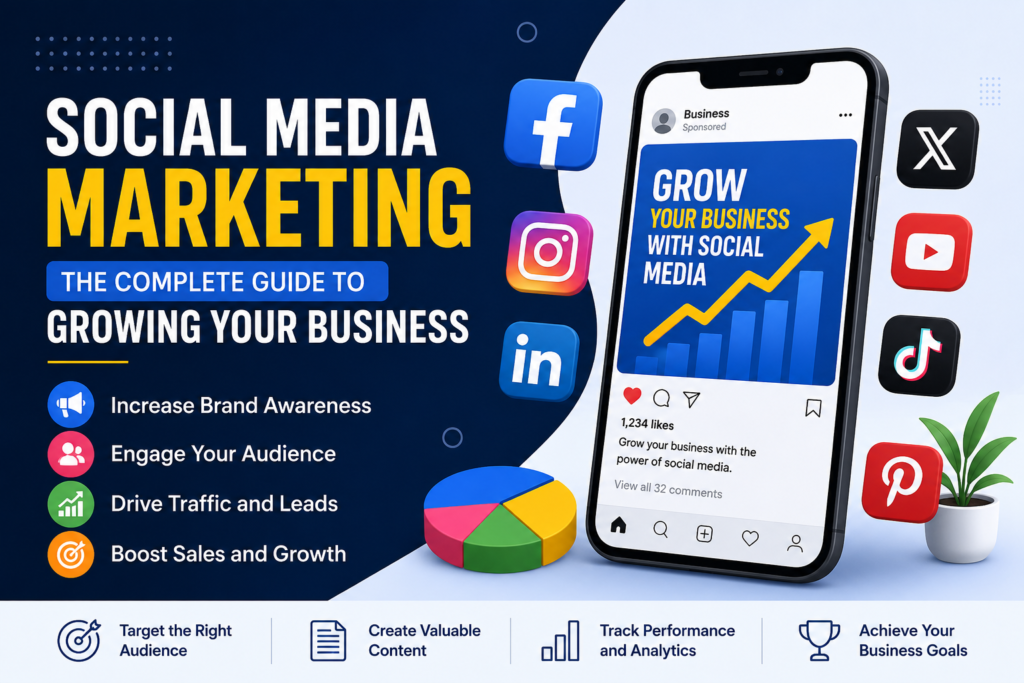
Social media marketing is the process of promoting products, services, or brands through social media platforms such as Facebook, Instagram, LinkedIn, X (formerly Twitter), YouTube, TikTok, and Pinterest. It combines content creation, audience engagement, paid advertising, and performance analysis to help businesses achieve marketing objectives.
Instead of broadcasting one-way promotional messages, social media enables businesses to build genuine relationships with customers. Companies publish valuable content, respond to comments, answer questions, and encourage discussions that create long-term trust. This interactive approach makes social media one of the most effective digital marketing channels available today.
Key Components of Social Media Marketing
An effective social media marketing campaign includes several important components. These include content creation, audience research, community management, paid advertisements, influencer collaborations, analytics, and continuous optimization. Every element contributes to building a stronger online presence and improving customer engagement.
Many businesses also develop a marketing strategy using social media to ensure their campaigns align with business objectives. A structured strategy helps teams create relevant content, select suitable platforms, and allocate budgets effectively for better long-term performance.
Goals of Social Media Marketing
The primary goal of social media marketing is to help businesses achieve measurable growth. Companies use social media to increase brand awareness, generate qualified leads, improve customer service, boost website traffic, and increase sales. Each objective should be supported by clear metrics to evaluate campaign success.
Businesses should establish SMART goals that are specific, measurable, achievable, relevant, and time-bound. These goals provide direction and make it easier to optimize campaigns based on real performance data instead of assumptions.
2. Why Social Media Marketing Is Important
Increases Brand Awareness
One of the biggest advantages of social media marketing is its ability to expand brand visibility. Millions of users actively browse social media platforms every day, creating opportunities for businesses to introduce their products and services to new audiences. Consistent posting keeps a brand visible and memorable.
Engaging content encourages users to like, comment, and share posts with their own networks. This organic exposure significantly increases reach and helps businesses attract potential customers without relying solely on paid advertising.
Drives Website Traffic and Leads
A well-executed social media marketing campaign directs interested users to websites, landing pages, blogs, and online stores. Every social media post acts as a gateway that encourages users to learn more about a business and explore its offerings.
Businesses that combine compelling content with clear calls to action often generate more website visitors and qualified leads. Whether promoting a new product, publishing educational content, or announcing special offers, social media becomes an effective channel for lead generation.
Improves Customer Engagement and Trust
Modern customers expect brands to communicate openly and respond quickly. Social media marketing allows businesses to engage directly with customers by answering questions, resolving concerns, and participating in conversations. These interactions build credibility and strengthen customer relationships.
Companies can also implement ahead social media co-marketing strategies by collaborating with complementary brands. Such partnerships help businesses reach new audiences while creating additional value through shared campaigns and promotional activities.
3. Popular Social Media Marketing Platforms
Facebook and Instagram Marketing
Facebook and Instagram remain among the most popular platforms for businesses of every size. These platforms support images, videos, stories, reels, live sessions, and targeted advertising, making them highly versatile marketing channels.
Businesses can showcase products, share customer testimonials, announce promotions, and interact with followers in real time. Their advanced advertising tools also allow marketers to target audiences based on demographics, interests, behaviors, and purchasing intent.
LinkedIn and X (Twitter) Marketing
LinkedIn is the leading platform for B2B marketing, professional networking, and industry thought leadership. Businesses use LinkedIn to publish educational content, connect with decision-makers, recruit employees, and generate business leads.
X (formerly Twitter) focuses on real-time conversations and trending topics. Brands use the platform to share quick updates, respond to customer inquiries, participate in discussions, and maintain active communication with their audience.
YouTube, TikTok, and Pinterest Marketing
Video content continues to dominate digital marketing, making YouTube and TikTok essential platforms for modern businesses. Tutorials, demonstrations, product reviews, educational videos, and behind-the-scenes content help brands establish authority while keeping audiences engaged.
Pinterest serves as a visual discovery platform where users search for inspiration before making purchasing decisions. Businesses in fashion, home décor, food, travel, and lifestyle industries particularly benefit from Pinterest’s strong purchase intent and long-lasting content visibility.
4. How to Build a Successful Social Media Marketing Strategy
Define Goals and Target Audience
Every successful social media marketing campaign begins with clearly defined goals and a thorough understanding of the target audience. Businesses should identify customer demographics, interests, online behaviors, and purchasing preferences before creating content.
Understanding customer needs allows businesses to create highly relevant campaigns that solve real problems. Brands wondering how to market your company on social media should begin by researching customer pain points and selecting the platforms where their audience is most active.
Create a Content Plan and Posting Schedule
Consistency is one of the biggest factors in successful social media marketing. A detailed content calendar helps businesses organize posts, maintain regular publishing schedules, and balance promotional content with educational and entertaining material.
Businesses should include a variety of formats such as videos, infographics, blogs, customer stories, polls, live sessions, and behind-the-scenes content. Planning content in advance also improves workflow and ensures campaigns remain aligned with marketing objectives.
Track Performance and Optimize Campaigns
Successful marketers constantly monitor campaign performance using analytics tools. Metrics such as reach, impressions, engagement, click-through rates, website traffic, conversions, and return on investment help determine whether campaigns are meeting objectives.
Regular performance reviews enable businesses to identify successful content, improve weaker campaigns, and make informed decisions based on data rather than assumptions. Continuous optimization leads to better long-term marketing results.
5. Best Practices for Social Media Marketing
Create High-Quality and Engaging Content
Quality content forms the foundation of effective social media marketing. Businesses should prioritize valuable, informative, entertaining, and visually appealing content that resonates with their audience. Every post should provide useful information or inspire meaningful interaction.
High-quality images, engaging videos, compelling captions, and clear calls to action increase audience participation and improve overall campaign performance. Consistently delivering valuable content encourages users to return and engage with future posts.
Maintain Consistent Branding and Posting
Brand consistency builds recognition and trust across every platform. Businesses should maintain consistent logos, color schemes, messaging, tone of voice, and visual style throughout their social media profiles and campaigns.
Posting regularly also keeps audiences engaged and signals that the business remains active. Maintaining a consistent publishing schedule helps improve visibility while encouraging followers to anticipate future content.
Use Analytics to Improve Results
Analytics provide valuable insights into audience behavior and campaign effectiveness. Businesses should regularly evaluate engagement, audience demographics, content performance, and conversion rates to identify areas for improvement.
Using these insights allows marketers to refine their content strategy, improve audience targeting, optimize advertising budgets, and maximize return on investment. Data-driven decision-making leads to stronger marketing outcomes over time.
6. Common Social Media Marketing Mistakes to Avoid
Posting Without a Clear Strategy
Many businesses publish content without a defined strategy, resulting in inconsistent messaging and poor performance. Random posting rarely produces meaningful results because it lacks direction and measurable objectives.
A well-planned strategy ensures every post contributes toward business goals while maintaining consistent branding and audience engagement. Strategic planning also makes it easier to evaluate campaign success and adjust future activities.
Ignoring Audience Interaction
Social media is designed for conversations, not one-way communication. Businesses that ignore comments, messages, reviews, or customer feedback risk damaging their reputation and losing valuable opportunities to build relationships.
Responding promptly demonstrates professionalism and shows customers that their opinions matter. Active engagement increases customer satisfaction while encouraging long-term loyalty and positive word-of-mouth marketing.
Failing to Measure Campaign Performance
Without tracking results, businesses cannot determine whether their social media marketing efforts are generating value. Ignoring analytics often leads to wasted budgets, ineffective campaigns, and missed growth opportunities.
Regular performance analysis helps businesses understand what works, eliminate ineffective tactics, and invest resources more efficiently. Continuous improvement based on measurable data ensures long-term success and sustainable business growth.
Conclusion
Social media marketing has become an essential part of modern business growth. From increasing brand awareness and generating leads to building customer trust and driving sales, social media offers businesses powerful opportunities to compete in today’s digital marketplace. Success depends on creating valuable content, engaging consistently with audiences, monitoring performance, and adapting strategies based on real data.
Whether you are launching your first campaign or improving an existing one, investing in a thoughtful marketing strategy using social media will deliver lasting results. By understanding how to market your company on social media and exploring ahead social media co-marketing strategies, businesses can expand their reach, strengthen customer relationships, and achieve sustainable growth in an increasingly competitive online environment.