
As the world’s population continues to grow and energy demands increase, the need for sustainable and environmentally friendly energy sources has never been greater. Renewable energy is emerging as a powerful solution to combat climate change, reduce pollution, and create a cleaner future for generations to come.
What is Renewable Energy?
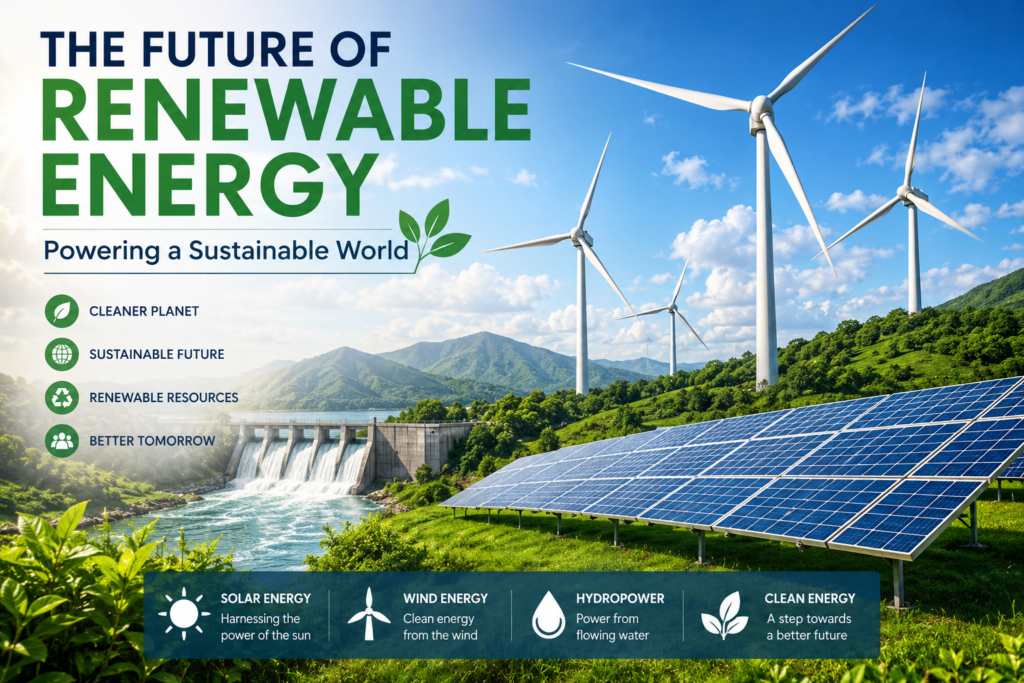
Renewable energy comes from natural sources that replenish themselves over time. Unlike fossil fuels such as coal, oil, and natural gas, renewable resources do not run out and produce significantly lower greenhouse gas emissions. The most common forms of renewable energy include:
- Solar Energy
- Wind Energy
- Hydropower
- Geothermal Energy
- Biomass Energy
Why Renewable Energy Matters
The burning of fossil fuels is one of the leading causes of global warming. Carbon dioxide and other greenhouse gases trap heat in the atmosphere, resulting in rising temperatures, extreme weather events, and environmental degradation.
Renewable energy helps address these challenges by:
- Reducing carbon emissions
- Improving air quality
- Conserving natural resources
- Creating new jobs and industries
- Enhancing energy security
Advances in Solar and Wind Technology
Recent scientific advancements have made renewable energy more efficient and affordable than ever before. Modern solar panels can convert sunlight into electricity with higher efficiency, while innovative wind turbine designs generate more power even at lower wind speeds.
Scientists are also developing advanced battery storage systems that allow excess energy to be stored and used when sunlight or wind is unavailable, making renewable energy more reliable.
The Role of Artificial Intelligence
Artificial Intelligence (AI) is transforming the renewable energy sector. AI-powered systems can predict energy demand, optimize power distribution, and improve the performance of solar farms and wind parks. These technologies help reduce waste and maximize energy output.
Challenges Ahead
Despite its benefits, renewable energy still faces several challenges, including:
- High initial installation costs
- Energy storage limitations
- Infrastructure upgrades
- Geographic constraints
However, ongoing scientific research and technological innovation continue to address these obstacles, making renewable energy increasingly accessible worldwide.
Conclusion
Renewable energy represents one of the most promising scientific solutions to the environmental challenges of the 21st century. As technology continues to evolve, the transition to cleaner energy sources will play a crucial role in building a sustainable future. By investing in renewable energy today, we can create a healthier planet and ensure long-term energy security for future generations.